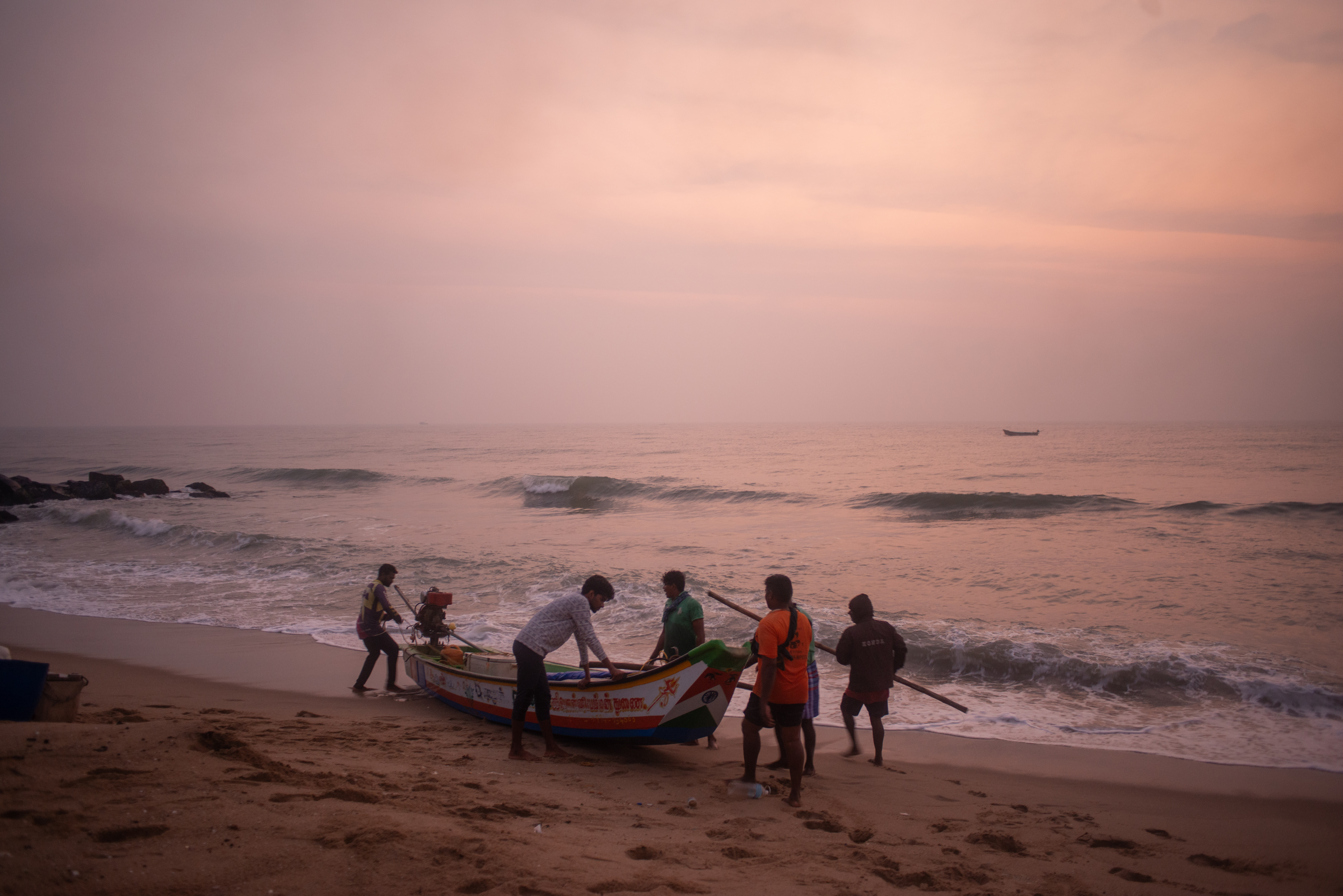
That piece of food on your plate… it’s brought to you by a human being! But did ANY cookbook EVER introduce you to that person… share the kaleidoscope of their culture, landscape and environment… share the passion and skill they bring to your food? Open the breathtakingly brilliant Seasoned by the Sea, and you’ll step into the lives, kitchens and recipes of India’s fishing communities on the Coromandel coast – between Chennai and Puducherry. If you want ONE book to rewire everything you know about food writing and fish, this is it.
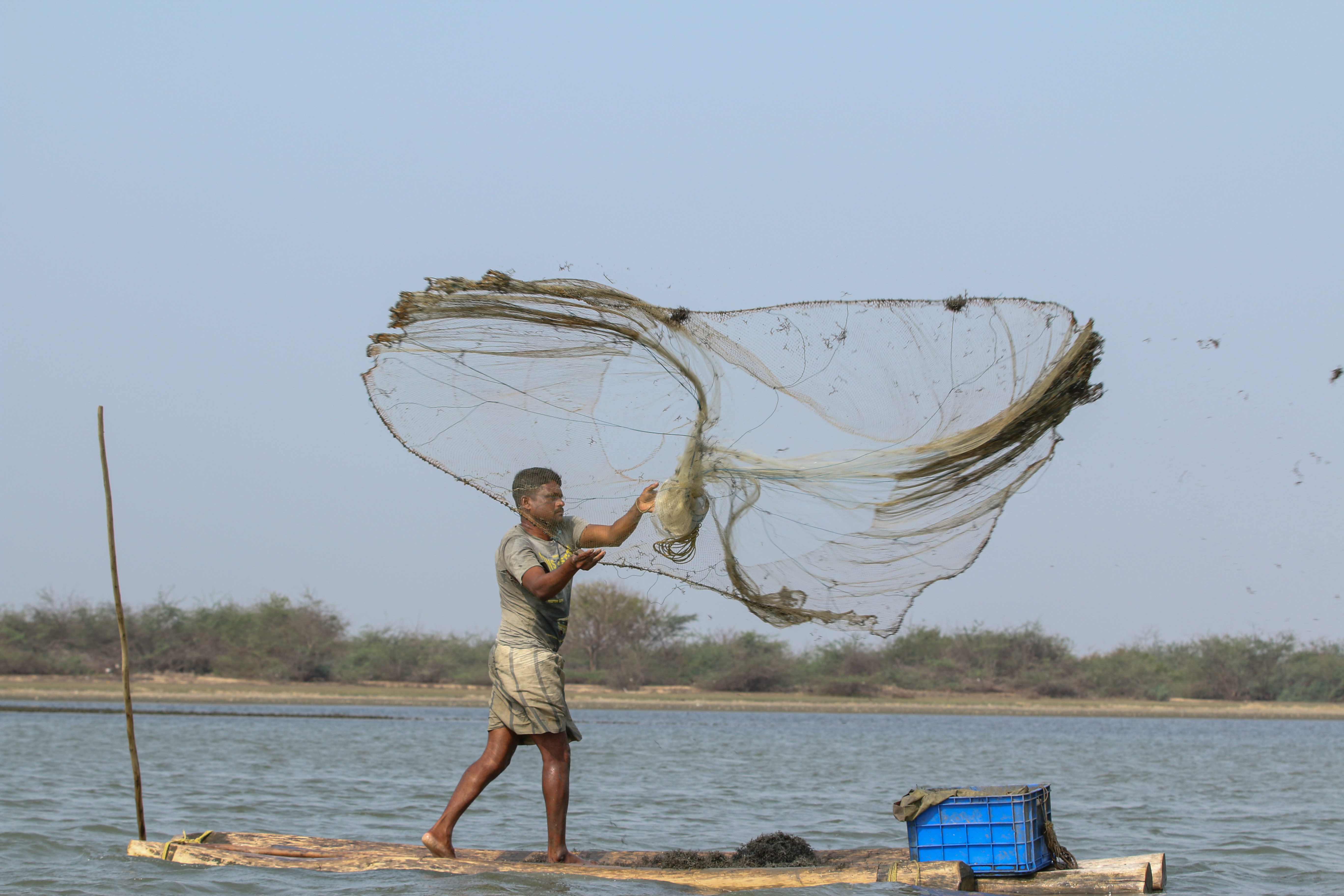
Net skills: celebrating the passion of Coromandel’s fisherpeople Photo: Palani Kumar
Tucked away in a quiet street in south London, there’s the miracle that’s Shalimar Books. Opening only on Saturdays, Shalimar modestly goes about a very important job: being Europe’s only bookshop 100% dedicated to Indian titles. People fly in from everywhere to find volumes on Indian history, culture, wellbeing and spirituality.
But for me, Shalimar is all about their collection of Indian cookbooks. In the basement – closed to the public – they have hundreds… possibly many hundreds… of rare foodie volumes. They let me browse down there, alone. Am I the only person who does it? It’s lovely to be trusted. Over the years, I’ve bought so many treasures.
On my most recent visit, they said they had something special for me: ‘a book printed in Tamil and English, devoted to seafood, super rare. Would I like to see it?’
Of course I would! But the book wasn’t on the shelf that day. So I paid the cover price, and went home to wait. Trust is a two-way thing.
A few days later, Seasoned by the Sea arrived in the post. I take the book in my hands, and the next few moments are a bit of a blur…
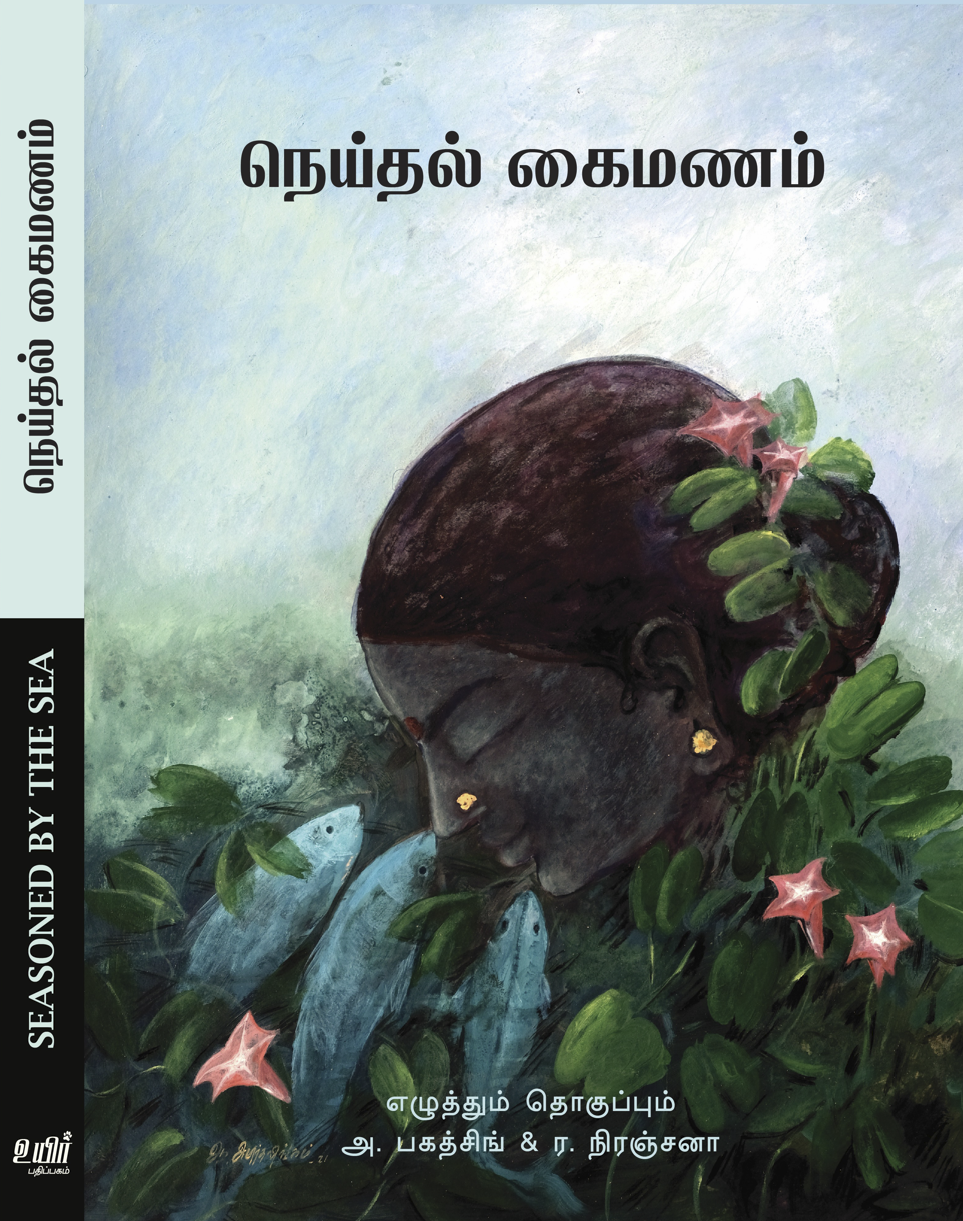
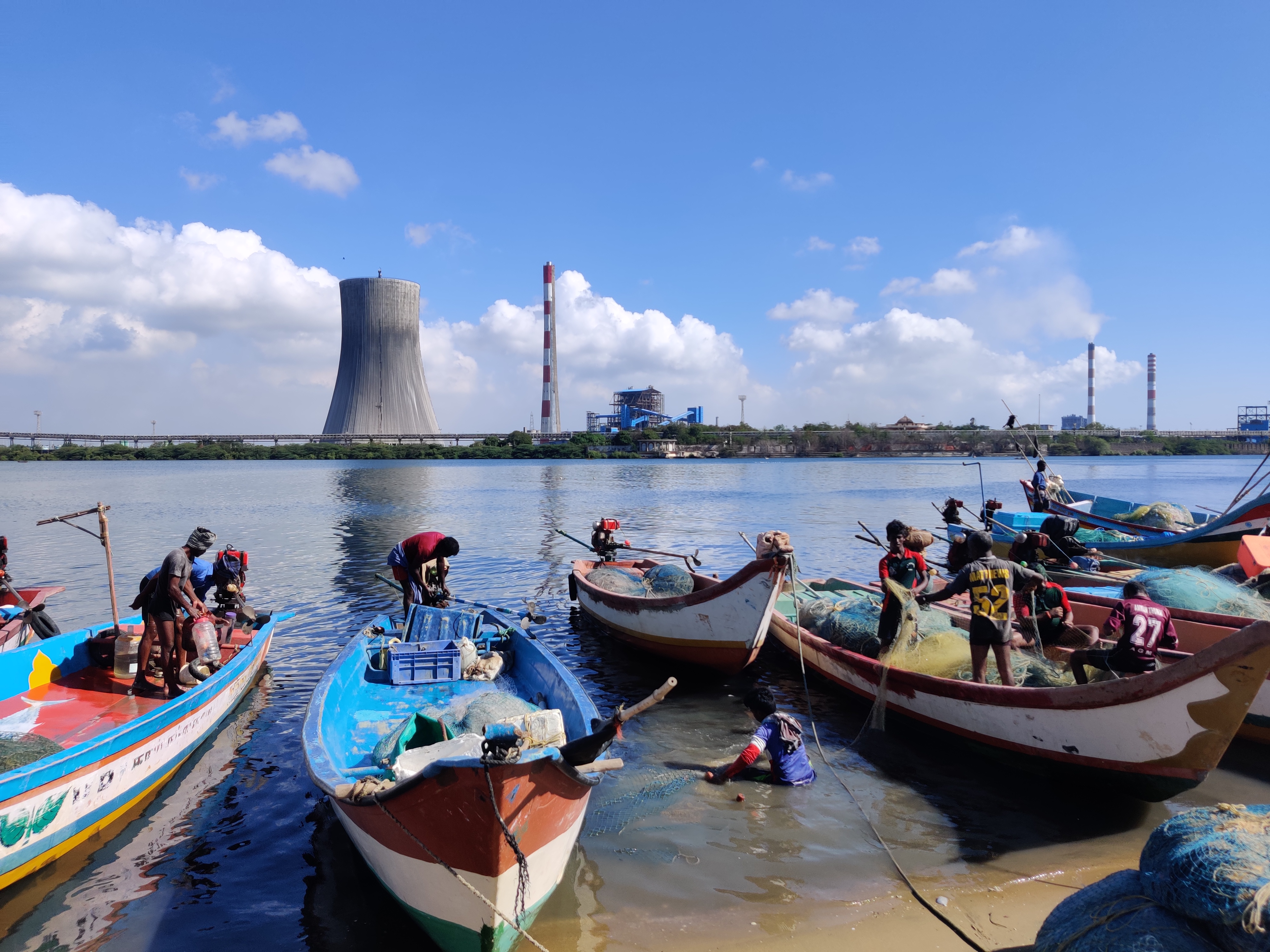
The cover is a masterpiece: I’m smitten. Within the first pages, I’m looking at a double-page image of working fishing boats – but photographed against the backdrop of a heavily industrialised environment. This is not your average, chocolate-box recipe book.
A few pages later, I’m reading an earthy recipe for fish head kulambu when I get to a sentence that stops me in my tracks: “But how far does the broader public understand or value life along the seashore to actually want to protect it… Do they cherish the coastal environment and the people who invest their labour and wealth of expertise in bringing them their favourite seafood?”
If you care about food – about the people who create it and the environments they work in – these are burning questions. For the next 300 pages, Seasoned by the Sea helps you explore the answers… alongside some of the greatest seafood recipes you’ll ever read.
Do the public cherish the people who bring them their favourite seafood?
Drawing you in with stunning photography by Palani Kumar and design by Anthoni Guruz, Seasoned by the Sea does what no other cookbook I know has ever done: it opens each chapter not with the name of a recipe but with the name of the cook or fisherperson who creates the dish.
It then invites you to step into their kitchen or boat… explores the breadth and richness of their life… considers the reality of caste… discusses the impact of industrialisation and climate change on their lives.
By the time I’d cooked Lokeshwari’s mouth-watering crab kootu, I knew I couldn’t just own the book – I had to talk to the team who created it. I messaged Anthoni Guruz, Palani Kumar and Niranjana Ramesh; they kindly replied.
This post is a shortened transcript of my conversation with Niranjana Ramesh, co-writer and translator – who took the lead on producing the book.
Good Korma: I’ve been collecting Indian cookbooks for 20 years, and have a mini-library of around 180 Indian cookbooks. Seasoned by the Sea is the best cookbook I own… it’s unlike anything I’ve seen. What was the catalyst?
Niranjana Ramesh: I’d been interested in exploring the politics of seafood for a while, and I’m interested in how food lets you talk about a bunch of other things. I’m from Tamil Nadu, and my postdoc project was entirely based in a town called Ennore, in northern Chennai. I ended up spending about six months there: renting an apartment, living and doing my field work.
As you might have seen in the pictures, Ennore is known as a place that’s extremely polluted. One of the first pictures you see in Seasoned by the Sea is a smokestack with all these fishing boats in front. That pretty much has come to define this place: a seafront with a massive thermal power plant whose effluent has polluted the waters beyond recognition.
“Changes happening on the coast in South India today are very spatial… you literally have coastlines disappearing”
Living there, one of the things I really enjoyed was going to the fish market. The vendors figured out I wasn’t from there and would tell me recipes. When we got chatting, and when they realised I was there for research, they asked: ‘Why don’t you write about this?’ The project didn’t come about in any formal way, but we soon realised it was much bigger than just collecting a few recipes. And for the women themselves, it also felt appropriate to have a book.
Good Korma: You’re a human geographer, working at London’s Queen Mary university. Can you tell me about human geography… and what your skills brought to the project?
Niranjana Ramesh: The changes happening on the coast in South India today are very spatial… you literally have coastlines disappearing. So, you need a project that brings together an understanding of how human life happens on that coast, but also how it might be shaped by the environment: how the sea changes, how climate changes, how fish movement changes and so on.
“There’s almost no Indian cookbooks from any marginalised caste, let alone fishers.”
There’s lots of literature on food and sustainability, but there’s little about how food forms a part of the making of a place. It’s a combination of culture, nature and memory, and that’s what geography brings together. So that was the project: to take food seriously as the spatial agent. I think Seasoned by the Sea is profoundly geographic.. every cookbook should be a geographical project.
Good Korma: Most cookbooks – if they introduce the cook at all – simply say, “I was travelling in India and a chef gave me this recipe”. But you never meet the chef, or understand their life. Seasoned by the Sea is very different because you open each chapters with the name of the cook or fisherperson. When did you make that decision, and why?
Niranjana Ramesh: You and I discussed on WhatsApp how much caste shapes food practises in India. Fishing is considered a marginalised occupation… it’s a caste occupation in many ways. There are a few different castes who practise fishing, but they would all be considered marginalised.
“It was very important we foregrounded the women… to acknowledge the labour they put into producing this delicious food.”
There’s almost no Indian cookbooks from any marginalised caste, let alone fishers. Seasoned by the Sea is a Tamil multi-caste cookbook. If you’re reading these books outside India, what might not be obvious is how many Indian cookbooks are single caste cookbooks. It might say it’s a Chettinad cookbook or a Rajasthani cookbook, but it’s actually a Rajput cookbook and not really a Rajasthani cookbook. Even if the book tries to bring together multiple castes, it’s often multiple dominant castes, because it is assumed that culture only rests in those dominant caste households.
And this is probably true of other cuisines. I have a Chinese cookbook, and I have no idea what kind of social relations shape that cooking, and who makes the kind of food I assume is Chinese. I’m very aware of that.
So, it was very important we foregrounded the women in order to acknowledge and valourise the labour they put into producing this delicious food. It’s exactly that labour that is stigmatised and marginalised in the caste structure. It was never just about the just the recipes.
Good Korma: What impact do you want the book to have?
Niranjana Ramesh: I don’t think we have any illusions this one project is suddenly going to change everybody’s minds about fishers or Ennore.
I told you Ennore is known as a polluted place – and there’s definitely a caste angle or environmental injustice angle as to why Ennore is so polluted and not some other affluent neighbourhood in Chennai.
So Ennore becomes easily designated as a space where nobody lives, where nobody goes, which is patently not true. The people who live there lead very active, rich lives. So Seasoned by the Sea was partially about saying: “look, people live here, there is life here!” It is not just a space that can be written off as polluted in one way or the other. It’s not as if someone’s going to pick up the book and change their mind about Ennore. But it’s a step. And we are definitely not alone in doing something like this. Chennai has a very active community of activists and local communities impacted by changes who are fighting this environmental injustice.
Good Korma: We meet dozens of women and fisher people in the book. Is there one of those stories that stands out to you?
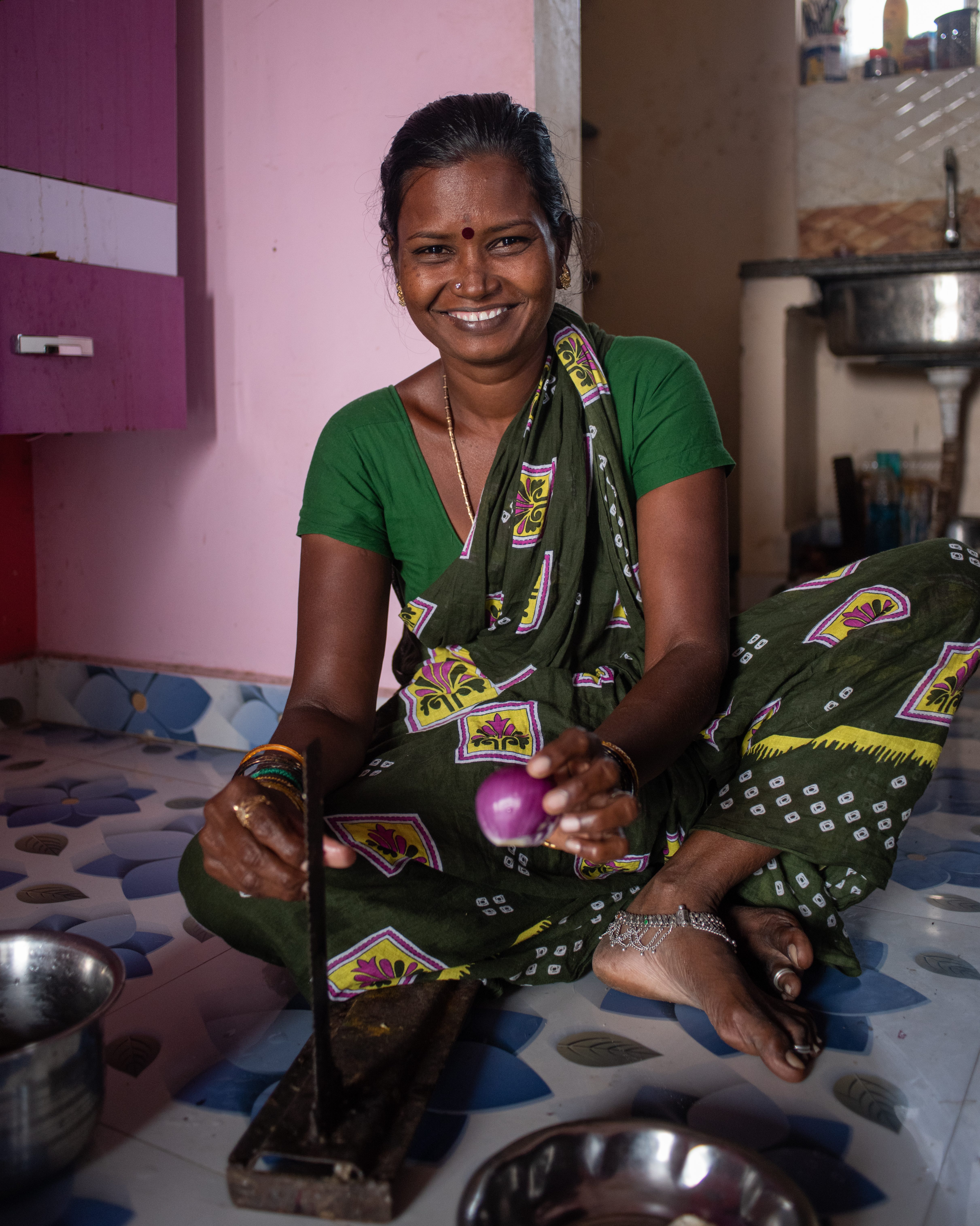
Bommi: fish vendor, spokesperson, campaigner Photo: Palani Kumar
Niranjana Ramesh: There’s a recipe by Bommi for crab pepper fry. Bommi’s a fish vendor in Ennore, and she’s head of the street vendors association for the area. Bommi is one of the people who’s willing to come out speak about the issues. Whenever we do public events, if they happen to be in Chennai, we encourage the organisers to invite Bommi rather than us, right?
Her story illustrates the point that these women have very rich, complex lives. People living in Ennore are often seen as in need of our help. But when I’m writing about these lives, I’m able to talk about their complexity, their multifacetedness, and their richness.
“These women have very rich lives… I’m able to talk about their complexity, their multifacetedness”
Good Korma: If I’m reading Seasoned by the Sea outside India, what’s the one thing you want me to understand?
Niranjana Ramesh: I don’t know if that question has a single answer. If you’re reading Seasoned by the Sea primarily from a food point of view, it’s to understand that food has so much life behind it, both in terms of environment and the human life that goes into making it.
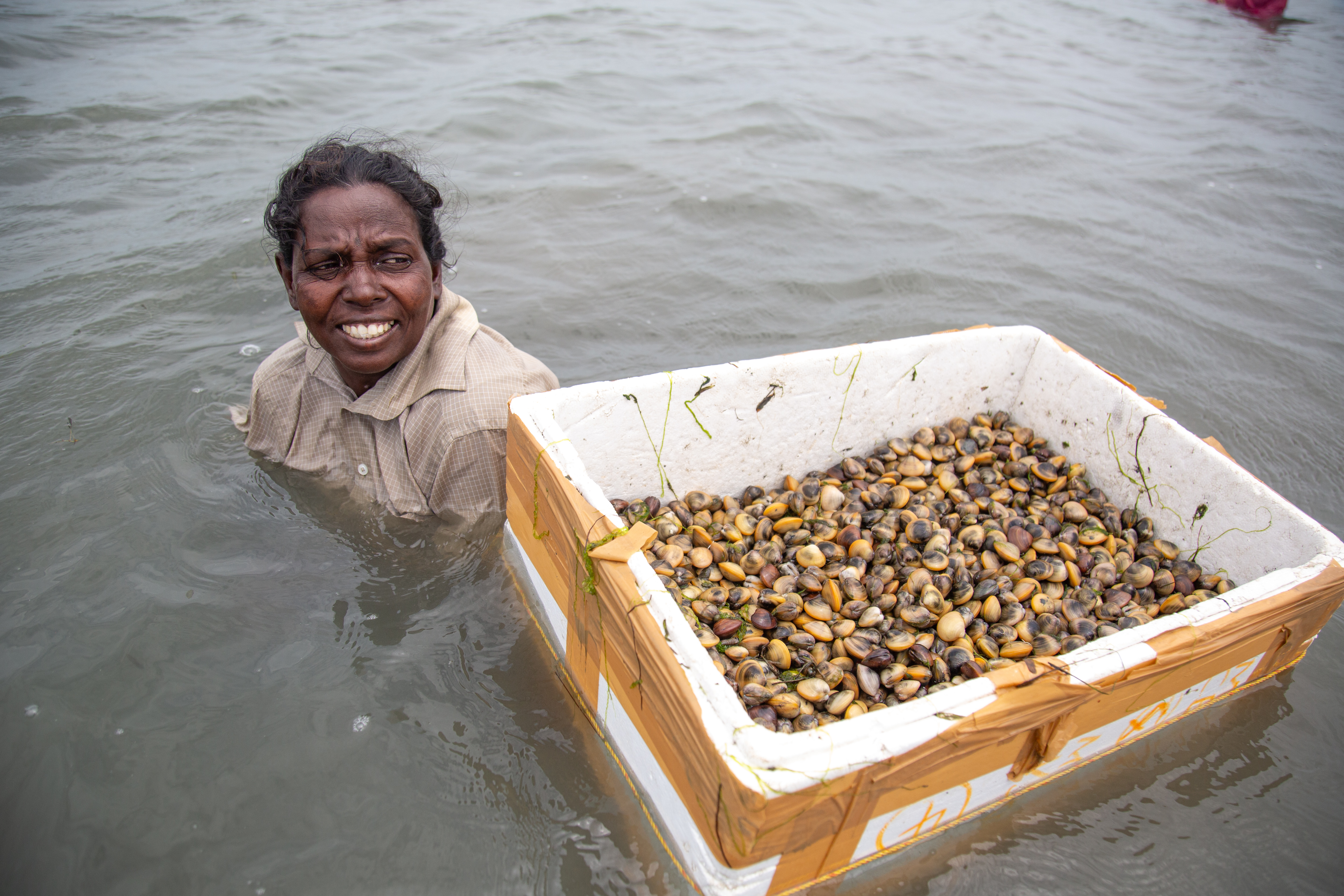
Clam harvest: “Celebrating the human life that goes into making food” Photo: Palani Kumar
One example is the chapter on clams, with a photo of the person collecting them. Clams are always described in recipes as something very simple, right? Just season with just a splash of white wine, or a squeeze of lime, and that’s it. But there’s nothing simple about a clam! The chapter shows how so much labour goes into it.. and that clams only ever grow naturally in a specific ecosystem.
“Clams are always described in recipes as something very simple, right? Just season with just a splash of white wine. But there’s nothing simple about a clam!”
So, for you to have that pure taste of clam… there’s so much behind it. That’s the single thing I want people to take away.